Kentucky Derby Betting, News, Tickets, & Odds
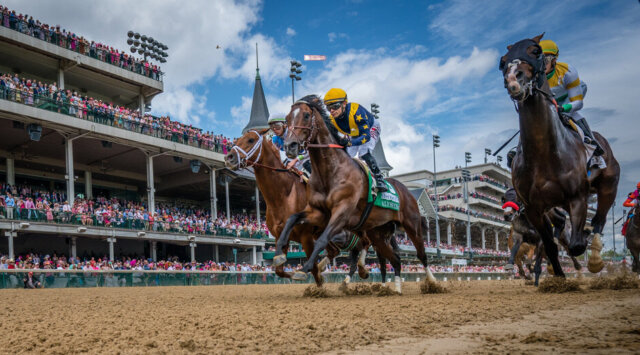
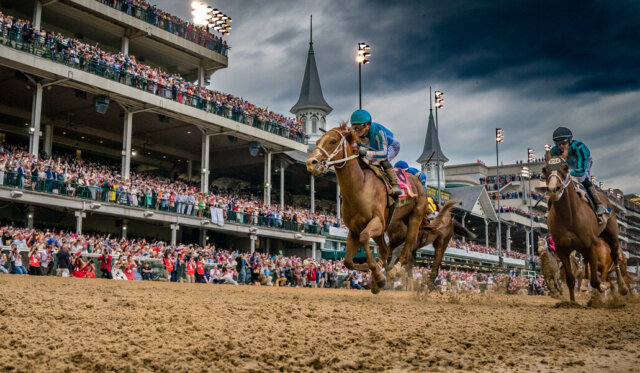
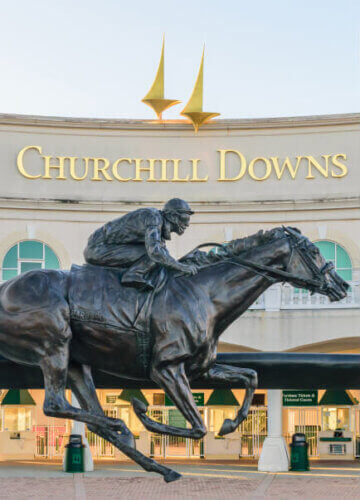
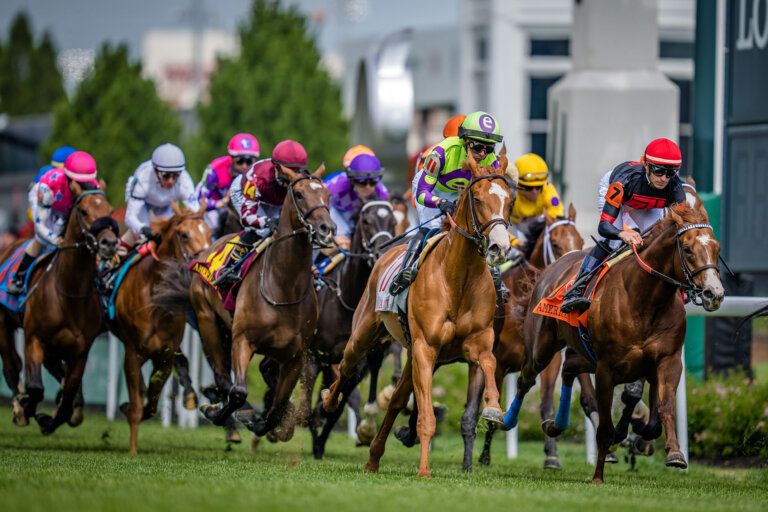
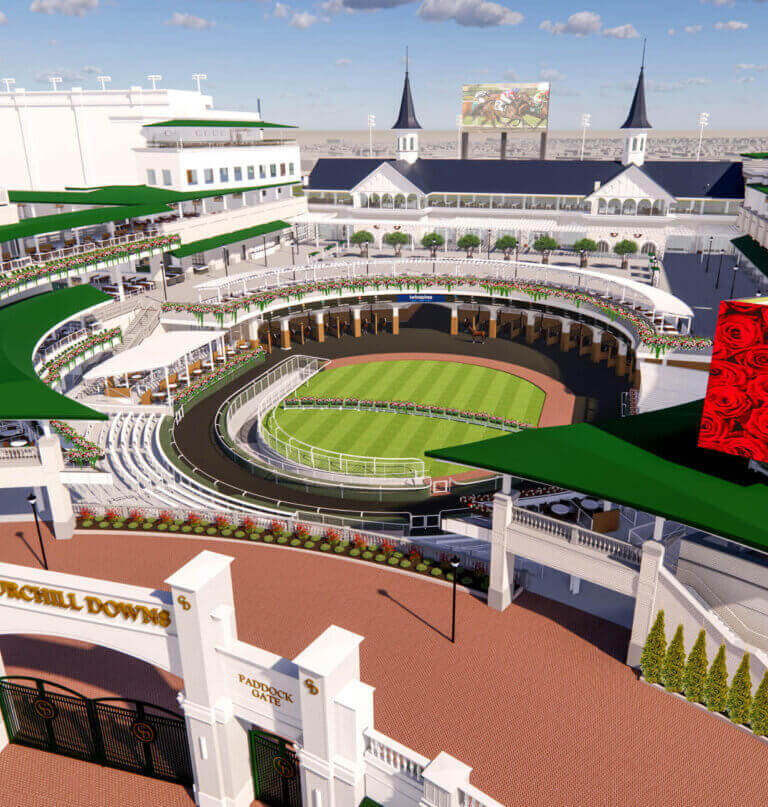
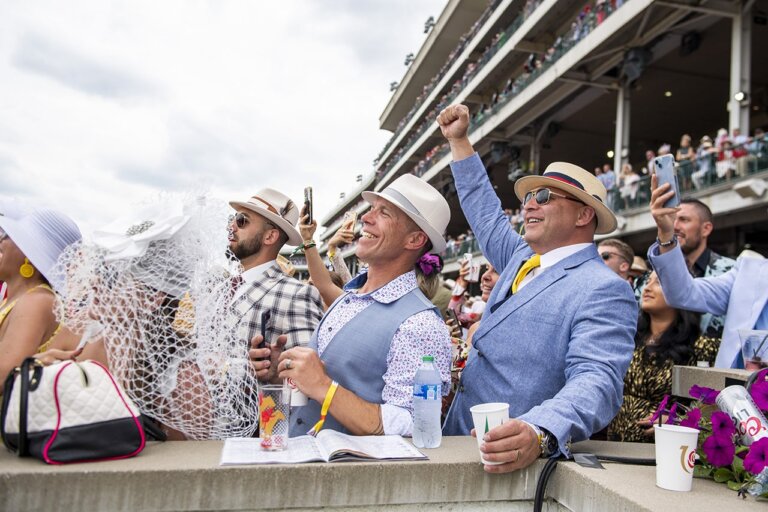
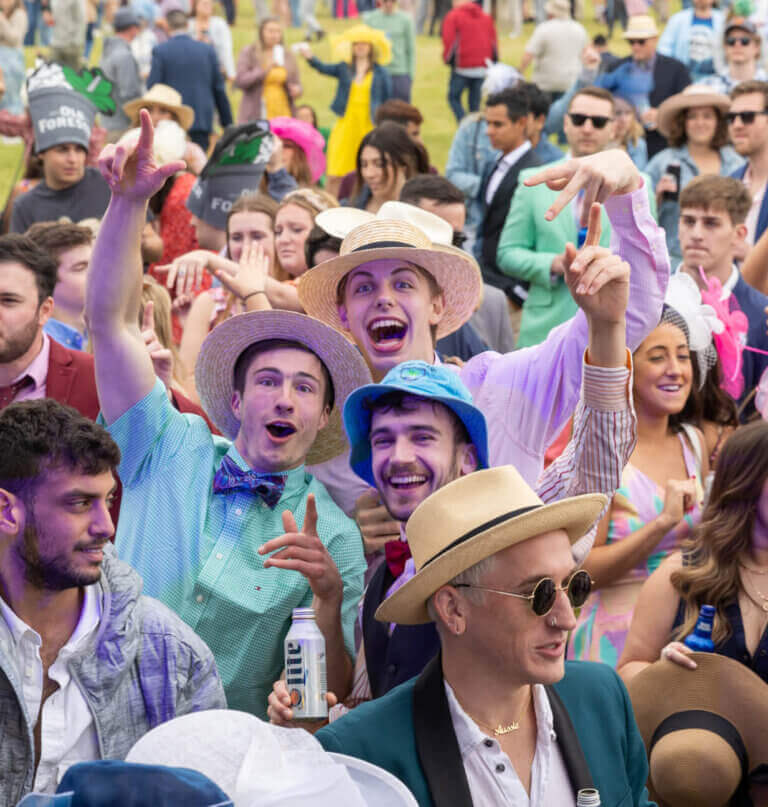
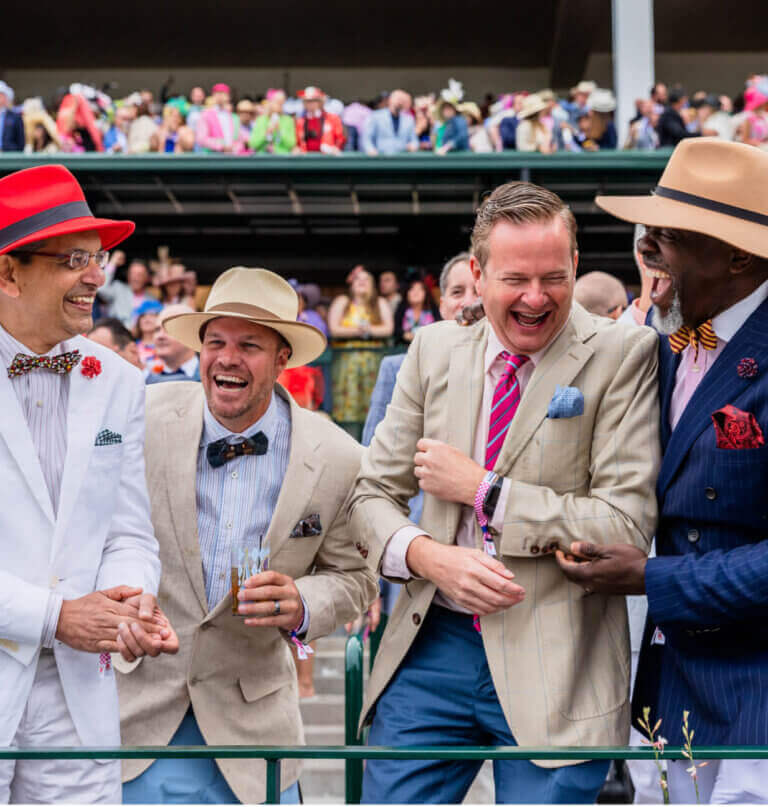
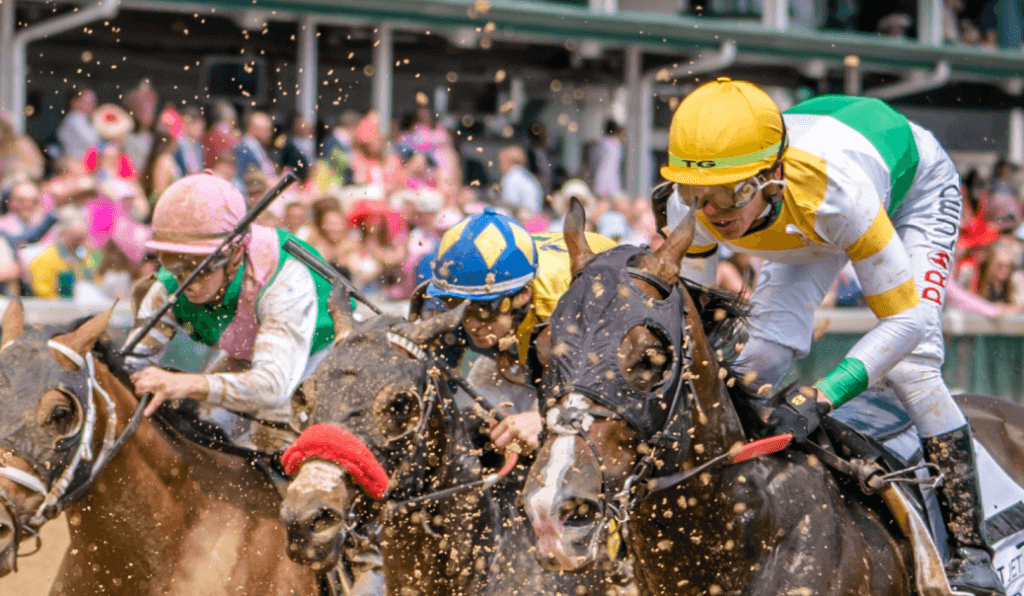
While Kentucky Derby may no longer be the biggest event of the year for serious horse racing enthusiasts – it’s been surpassed by the Breeders’ Cup – it remains the most significant and popular horse race for casual fans and the mainstream public. Known as ‘The Run for the Roses’, the Derby is held annually on the first weekend in May at Louisville’s venerable Churchill Downs beneath the iconic Twin Spires. It is also a big social event in the region and the live attendance at the Kentucky Derby surpasses that of any other major stakes race in the United States. The Derby is one of the oldest major races in the sport and is the first leg of horse racing’s Triple Crown.
138th Kentucky Derby Winners - Updated with the 138th Kentucky Derby Results!
Top Racebooks for Betting On The Kentucky Derby
Kentucky Derby Betting
The Kentucky Derby is similar to the Super Bowl, and NCAA basketball tournament in that even casual fans and people who otherwise don’t follow derby racing want to bet on horses. While it’s impossible to give hard and fast rules about Kentucky Derby Betting – or any other race for that matter – here are some concepts that have proven successful in the past. Handicapping horses is hard work, and very complex discipline unto itself. Keep in mind that these concepts won’t necessarily work for other stakes races, nor is there any guarantee that they’ll always be effective in the Kentucky Derby. Still, with 138 Kentucky Derby races in the books it is possible to put together a ‘profile’ of traits that are most frequently found in winning horses.
One thing that usually isn’t a factor is the distance of the race or scheduling concerns. Most, if not all, top three year olds can handle the mile and a quarter. Distance definitely is an issue in the third leg of the Triple Crown – the Belmont Stakes – where horses go 1½ miles but the Derby distance isn’t an issue. In most cases, neither is scheduling. Horses that compete in all three legs of the Triple Crown have to not only beat the other entrants in the field but also have to endure a brutal three races in five weeks schedule. Since the Kentucky Derby is the first leg of the Triple Crown, horses are most often well rested. In fact, most of the major Derby prep races are scheduled as to provide sufficient lead time before the big race.
Betting The Kentucky Derby Favorites
Serious horse players usually dismiss the Kentucky Derby favorites in any race for the simple fact that they seldom provide good wagering value. A day in/day out player at the horse track (or the racebook for that matter) will only be profitable if he finds and bets on good value propositions. The Kentucky Derby is no exception and in the past few decades post time favorites have performed very poorly. During the seventies, it was a race dominated by the favorite including three great Triple Crown winners-Secretariat, Seattle Slew and Affirmed-and a great horse that came close, Spectacular Bid. After Spectacular Bid won as a favorite in 1979, however, it would be 21 years before another favorite took the Roses (Fusachi Pegasus in 2000). In the ten races since, there have been three favorites to win – Smarty Jones (2004), Street Sense (2007) and Big Brown (2008). Many horse bettors prefer to do Breeders Cup betting due to horses competing from all over the world.
In all fairness, it should be noted that the Kentucky Derby favorite has been a historically strong proposition. In the 136 Kentucky Derby races, the post time favorite has won 52 of them for a just over 38% winning clip. The 21 year drought between Spectacular Bid and Big Brown could have just been a statistical aberration, since the 4 favorites winning in the last 11 races is right in line with the historical performance. Still, there’s a good reason to not get hung up on the pre race favorite. Most of the horses in the field will not have competed against each other prior to the Derby and almost certainly will not have faced competition of this class. The post time favorite is often the ‘most hyped’ horse but not necessarily the best horse. You probably shouldn’t dismiss the favorite entirely, but by the same token don’t assume that it’s necessarily the best entry in the field.
Kentucky Derby History
The Kentucky Derby dates back to 1875 and was the brainchild of Col. Meriwether Lewis Clark, who was the grandson of William Clark of ‘Lewis and Clark’ fame. Clark traveled to Europe and was particularly impressed by England’s Epsom Derby horse race. Upon returning to Kentucky, he founded the Louisville Jockey Club with the goal of creating a world class horse racing facility in Central Kentucky. The land for the track was donated by Clark’s relatives, John and Henry Churchill, and the horse racing facility soon became known as ‘Churchill Downs’ although it wouldn’t be officially incorporated under that name until the 1930′s.
Befitting the sport’s best known race, the great performances in Kentucky Derby history include a ‘who’s who’ of the true legends of horse racing. Certainly the most famous Kentucky Derby winners are horses that went on to win the coveted Triple Crown. Only eleven horses in history have joined this exclusive club and none since 1978. In addition to the aforementioned Sir Barton (1919) and Gallant Fox (1930) Derby winners that have gone on to win the Preakness and Belmont include Omaha (1935), War Admiral (1937), Whirlaway (1941), Count Fleet (1943), Assault (1946), and Citation (1948). After that, there was a twenty five year drought with no Triple Crown winners before Secretariat – considered by many the greatest race horse in history – won all three races in 1973. There would be two more Triple Crown winners in the 1970′s – Seattle Slew in 1977 and Affirmed in 1978. Jim Fitzsimmons (Gallant Fox, Omaha) is the only trainer to win more than one Triple Crown while the legendary Eddie Arcaro (Whirlaway, Citation) is the only jockey to accomplish the feat more than once.
The fastest time ever run at the Kentucky Derby’s current distance was turned in by Secretariat in 1973 when he completed the mile and a quarter in 1 minute 59 2/5 seconds. Further demonstrating the greatness of ‘Big Red’ was his astounding fractional times – every quarter mile of the race was faster than the one before it, which is virtually unheard of. The only other sub two minute times in the Kentucky Derby were run by Secretariat’s arch rival Sham, who finished 2/5 of a second behind the winner. In 2001, Monarchos turned in the only other sub two minute Derby run winning the race in 1:59:97.
This year’s Derby will be the 137th running and superstar jockey Calvin Borel will be looking to continue his mastery of the dirt track at Churchill Downs and extend his unprecedented run of success in the race. Borel won the 2010 Derby aboard Super Saver and has won three of the last four races. He also won aboard Mine That Bird in 2009 and Street Sense in 2007 and is the only jockey in history to win three out of four Kentucky Derby races – http://www.kentuckyderby.org.